

FIVE-PART WEBINAR SERIES
How to Build the Conditions for Continuous Improvement
Most organizations invest heavily in Lean tools, problem solving, and operational excellence.
Far fewer know how to systematically develop the interpersonal capabilities that determine whether those systems actually succeed.
This webinar series explores why and how.
Knowing what to build is not the same as knowing how to build it.
Organizations pursuing operational excellence already understand that continuous improvement depends on people. Lean gives us powerful methods for improving work, and the Shingo Model helps define the principles that support operational excellence.
The Respect for People Roadmap was created to close the practical gap. It develops the behaviors and conditions that make it more likely people will speak up, ask for help, surface problems, challenge assumptions, and work together differently than what is familiar.

THE CENTRAL QUESTION
What has to be true before people willingly contribute what they know?
Will people raise a concern or stay quiet?
Ask for help or work around the problem?
Challenge the status quo or defer to what is familiar?
Follow a new standard or return to the old way?
THE MECHANISM FOR CHANGE
Improvement happens when people have both the capability and the conditions to act.
Technical capability
+ Relational capability
= Better execution
Technical systems create the potential for improvement. The relational conditions around the work influence whether that potential turns into action. At the point of execution, people are constantly interpreting what is safe, what is acceptable, how others will respond, and what happened the last time someone spoke up.
THE ROADMAP
Respect for People can be learned, practiced, and strengthened.
The Respect for People Roadmap is not simply a reminder to be respectful. It is an organizational capability-building system designed to help people intentionally develop the interpersonal competencies that strengthen communication, collaboration, trust, problem solving, and leadership. Through deliberate practice and application in everyday work, those competencies become habits, those habits shape interactions, and over time those interactions shape culture.
ENGAGE WITH COMPASSION
The foundation for better problem solving: reduce judgment, understand before acting, and support the person closest to the work.
Check your perspective
Seek to understand
Act to support
TREAT PEOPLE LIKE THEY MATTER
Broaden who contributes to improvement by seeing, valuing, and enabling the strengths people bring to the work.
Prioritize wellbeing
Value individuality
Spotlight others
PARTNER FOR MUTUAL BENEFIT
Channel contribution toward shared results through transparency, candor, and alignment around what matters most.
Show your cards
Speak with candor
Get on the same page
THE WEBINAR JOURNEY
See how the Roadmap builds the conditions for continuous improvement.
Organizations pursuing Lean, Operational Excellence, or the Shingo Model often have robust systems for improving processes, but few have a systematic way to develop the interpersonal capabilities that make those systems successful.
This webinar series explores how organizations can intentionally build those capabilities and create the conditions where Continuous Improvement thrives.

WHY THIS IS DIFFERENT
Building the human capabilities that continuous improvement depends on.
Continuous improvement depends on the choices people make in everyday moments: whether they share what they see, test a new way, ask for support, challenge an assumption, or help someone else succeed.
The Roadmap helps organizations intentionally build the conditions that make those choices easier, more normal, and more sustainable.
TAKE THE NEXT STEP
Where would you like to go next?
CONTINUE THE CONVERSATION
Connect with Scott, Dan and Melinda.
If something from the presentation raised a question, sparked an idea, or made you curious about how these concepts could apply in your organization, we'd be glad to continue the conversation.

Scott Gauvin
Co-founder,
Respect for People Roadmap
Scott has spent more than 30 years helping organizations improve how work gets done and how people experience doing it. His work focuses on the intersection of operational excellence, leadership, culture, and human behavior. As co-founder of the Respect for People Roadmap and CEO of Macresco, he helps organizations develop the conditions and behaviors that enable people to contribute, collaborate, and continuously improve.
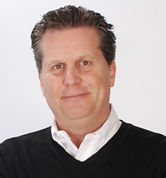
Dan Fleming
President,
GBMP Consulting Group
Dan Fleming has spent more than 30 years in operations and engineering, including more than 25 years learning, leading, and teaching the principles of the Toyota Production System and continuous improvement. As President of GBMP Consulting Group and a Master Shingo Institute Workshop Facilitator, he helps organizations across industries develop the practices and capabilities that support operational excellence and sustainable continuous improvement.

Melinda Manente
Consultant,
GBMP Consulting Group
Melinda Manente has more than 30 years of experience helping organizations improve performance and lead change. With improvement leadership experience at Intel, Parker Hannifin, Cisco, and GE, she brings deep expertise in Lean transformation, employee engagement, and operational excellence. As a Continuous Improvement Manager at GBMP, she helps organizations build the capabilities and culture needed for sustainable improvement.