

LEARN MORE
Thanks for joining us.
We hope today's conversation gave you a few new ways to think about Respect for People, operational friction, and the conditions that allow people to contribute, collaborate, and improve the work.
Below are several resources and ways to contact us if you'd like to learn more about the Respect for People Roadmap.
KEEP EXPLORING
Take the ideas
from the
presentation a
step further.
Below you'll find a few resources to help you continue exploring the ideas we discussed, look more closely at the friction affecting your organization, and experience the Respect for People Roadmap for yourself.
You can also revisit the presentation, join a few of the
conversations we're having on LinkedIn, and reach out to
either of us if you'd like to continue the discussion.

IMPROVING WORKPLACE CONDITIONS AND OUTCOMES
Learn how the everyday moments
of work shape the conditions for
improvement.
How people communicate, respond, solve problems, support one another, and make decisions together helps create the conditions in which improvement either accelerates or encounters friction.
TAKE THE NEXT STEP
Where would you like to go next?
WHY WE RECOMMEND THE ASSESSMENT
Not every operational problem is a process problem.
Friction often shows up in the interactions surrounding the work: whether people speak up, how information gets shared, how teams coordinate, how people respond when something goes wrong, and what happens when someone challenges the way things have always been done.
The Operational Friction Assessment gives you a way to step back and identify where those patterns may be helping or hindering execution in your organization.


Consider bringing the question back to your leadership team, project team, or colleagues and comparing what each person sees.
You can also join the conversation on LinkedIn and share your perspective with others exploring the same question.
JOIN THE CONVERSATION
Share Your
Perspective
Respect for People is not a conversation that ends when the presentation does. Follow the Roadmap and join us as we continue exploring the behaviors, conditions, and everyday interactions that shape how people work and improve together.
JOIN THE CONVERSATION
Share Your
Perspective
Respect for People is not a conversation that ends when the presentation does. Follow the Roadmap and join us as we continue exploring the behaviors, conditions, and everyday interactions that shape how people work and improve together.

EXPERIENCE THE ROADMAP
Experience the
Roadmap for Yourself.
Move from learning about the ideas to practicing them.
The Respect for People Roadmap gives you a structured way to develop and practice the interpersonal behaviors that continuous improvement depends on. Join an upcoming open-enrollment cohort and experience the learning, reflection, practice, and feedback that make the Roadmap different from a traditional workshop.
SPECIAL EVENT
PARTICIPANT OFFER
SAVE 50%
USE CODE
Available for a limited number
of seats in the upcoming cohort.
LCI1013
JOIN THE CONVERSATION
Share Your
Perspective
Respect for People is not a conversation that ends when the presentation does. Follow the Roadmap and join us as we continue exploring the behaviors, conditions, and everyday interactions that shape how people work and improve together.
CONTINUE THE CONVERSATION
Connect with Scott and Jody.
If something from the presentation raised a question, sparked an idea, or made you curious about how these concepts could apply in your organization, we'd be glad to continue the conversation.

Scott Gauvin
Co-founder, Respect for People Roadmap
Scott has spent more than 30 years helping organizations improve how work gets done and how people experience doing it. His work focuses on the intersection of operational excellence, leadership, culture, and human behavior. As co-founder of the Respect for People Roadmap and CEO of Macresco, he helps organizations develop the conditions and behaviors that enable people to contribute, collaborate, and continuously improve.
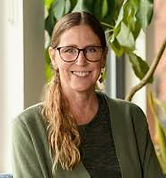
Jody Douglas
Lean Coach
Jody brings extensive experience in Lean, design, construction, and Respect for People. She works with leaders and teams to strengthen collaboration, improve how people work together, and create the conditions that support better problem solving and performance. Her work connects Lean principles with the everyday behaviors and interactions that help people contribute, learn, and continuously improve.
